
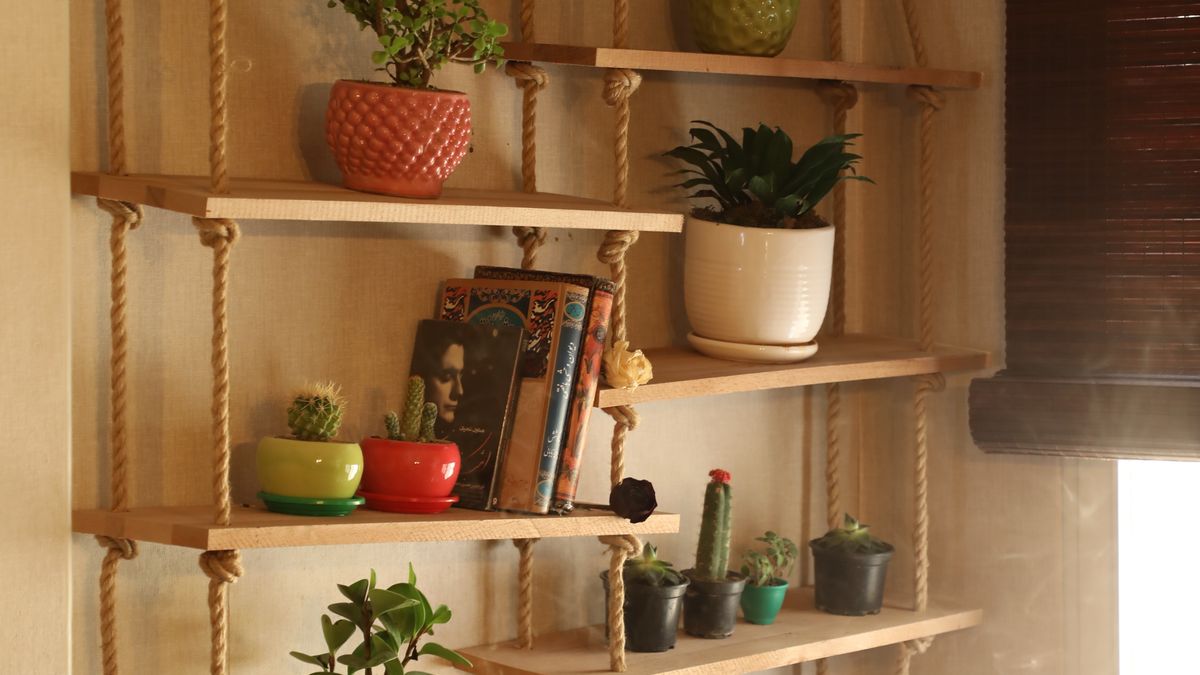
A narrow hallway is one of the hardest working spaces in a British home, and usually one of the smallest. It has to absorb coats, shoes, keys, post and dog leads while still letting you walk through with a shopping bag in each hand. The trick is not to squeeze in more furniture, but to choose pieces that are deliberately shallow and to use the walls instead of the floor.
Before you buy anything, work out how much space you actually have to move through. Measure the narrowest point of the hall, then subtract the depth of whatever you are planning to put there. A comfortable clear walkway is around 90cm; anything under 75cm starts to feel like an obstacle course, particularly if you are carrying a toddler, a laundry basket or a bike.
Run a tape measure along the floor and mark the limit with a strip of masking tape for a day or two. It sounds fussy, but it stops you falling in love with a beautiful console that leaves you edging sideways past it every morning. In most tight halls, the realistic depth for furniture is 25–30cm, and nothing more.
It also helps to decide which side of the hall is the "working" side. If the front door opens against the left wall, that side is largely lost anyway — so that is where the storage should go, and the opposite wall stays clear.
Purpose-built slim furniture has come a long way, and there is plenty designed specifically for hallways. Look for:
Measure your tallest boots and trainers before buying a shoe cabinet. Many are designed around a 30cm internal height, which is fine for shoes but not for wellingtons. If boots are a big part of your household, a dedicated boot tray under a bench often works better than a cabinet.
If you are handy, a shallow wall-hung shelf with a lip, painted to match the wall, can do the job of a console for a fraction of the cost and almost no visual weight.
Floor space is precious in a narrow hallway, but wall space above waist height is usually wasted. This is where hooks, rails and narrow shelves earn their keep.
Use the same finish throughout — brushed brass, matt black or painted wood — so the wall reads as one calm system rather than a jumble of fittings.
A narrow hallway rarely has much natural light, and dark corners make it feel tighter than it is. A mirror is the single most useful addition, and you get the practical benefit of a last-minute check before you leave the house.
Position a mirror so it reflects a window or a light source rather than a blank wall. A tall, slim mirror above a console works in a narrow space; a wide one will simply emphasise how little wall you have.
On colour, pale walls in a washable matt or eggshell finish help a small space recede, and painting the ceiling the same shade makes the walls feel taller. If you want something bolder, keep the strong colour below the dado or use it on the far end wall so the eye is drawn down the length of the hall rather than across its width. Warm white bulbs at around 2700–3000K flatter the space far better than harsh cool white, and a pair of wall lights uses no floor space at all.
The best hallway storage fails quietly: within a fortnight it is full of bags that belong upstairs and shoes nobody has worn since September. A few simple habits keep it under control.
If you follow one rule, make it this: nothing in a narrow hallway should be deeper than 30cm unless it is doing double duty as a seat. Get that right, and a tight entrance can be genuinely tidy and still easy to walk through.

Hi, my name is Anthony kuber. I am artist and fashion designer.
I love to travel and writing blogging.
Your email address will not be published. Required fields are marked *
Software Developer & Writer
Hey, I'm Diva, a developer and writer blending code and creativity. I'm driven by a deep curiosity and a relentless pursuit of excellence. Join me as I craft digital solutions and captivating stories.


